
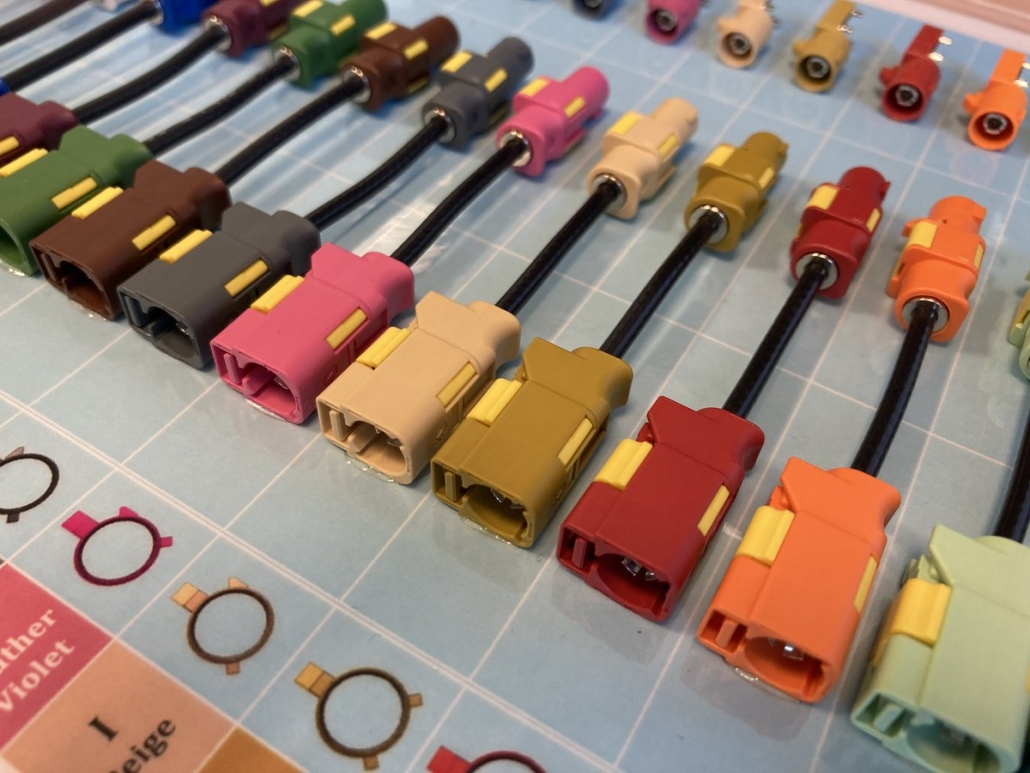
HSD Connectors: Definition, Types, and Applications
HSD connectors, also known as connectors, plugs, or sockets, are devices used to connect one circuit conductor or transmission component to another. They are commonly used to connect two active devices to transfer electrical current or signals and are typically installed on cables or equipment for detachable connection of a transmission system.
Introduction
HSD connectors are a critical component in the field of electronic engineering. They serve as a bridge between circuits that are interrupted or isolated from one another and are used to connect electrical conductors or signal transmission components between active devices.
This article will define HSD connectors, discuss their functions, types, structure, and design, as well as their applications in different fields. It will also examine the factors to consider when choosing HSD connectors, how to maintain and troubleshoot them, and their advantages and disadvantages. Lastly, it will provide an insight into the future of HSD connectors.
Definition of HSD Connectors
HSD connectors are devices that are used to connect one circuit conductor or transmission component to another. They provide a detachable interface between two subsystems of a circuit, and the interface should not cause any adverse effects on the system’s performance.
In the context of this article, HSD connectors refer to electronic HSD connectors that are used to transfer electrical current or signals between two active devices.
Functions of HSD Connectors
HSD connectors are essential components in electronic devices as they are responsible for connecting circuits and components to ensure that the device functions correctly. They facilitate electrical and signal transmission between the various components of the device and ensure that the circuit’s current flow is uninterrupted.
Applications of HSD Connectors
HSD connectors are used in various fields such as the automotive, telecommunications, medical, consumer electronics, and industrial sectors.
In the automotive sector, HSD connectors are used to connect various electronic components such as sensors, lights, and other devices.
In the telecommunications sector, HSD connectors are used to connect network devices, fiber optic cables, and communication devices.
In the medical sector, HSD connectors are used in medical equipment such as ultrasound machines, MRI scanners, and other medical devices.
In the consumer electronics sector, HSD connectors are used in devices such as mobile phones, laptops, and other electronic devices.
Types of HSD Connectors
HSD connectors come in a variety of shapes and structures. With different application objects, frequencies, powers, and environmental conditions, various forms of HSD connectors exist. For instance, HSD connectors for home wiring connections, stadium lighting, hard disk drives, communication networks, and rocket ignitions all have different shapes, structures, performance specifications, and indicators.
Regardless of the type of HSD connector, it is necessary to ensure that the current or signal that flows through it does so continuously and reliably. As technology develops and advances, especially with the rapid development of optoelectronics, HSD connectors no longer transmit only electrical current or simple signals. In fiber optic systems, the medium for transmitting signals is light. Glass and plastic have replaced wires in ordinary circuits, enabling far-distance transmission. Optical signal HSD connectors play an essential role in this technology.
Applications of HSD Connectors
In China, HSD connectors, switches, and keyboards are collectively referred to as electrical connectors, and electrical connectors and relays are collectively referred to as mechatronic components. As consumer electronics, automotive electronics, and communication terminal markets develop, China has become the world’s fastest-growing and largest-capacity market for HSD connectors. These connectors are primarily used in transportation, communication, networks, IT, medical, home appliances, instrumentation, and other fields.
Automobiles are among the most significant users of HSD connectors. Automotive electronics, which include infotainment systems, safety systems, and powertrain management systems, all require high-speed data transmission, low power consumption, and a high level of reliability, which HSD connectors provide. These connectors also play a vital role in medical devices and equipment, such as patient monitors, MRI machines, and X-ray machines, where the integrity of electrical transmission is critical.
Conclusion
HSD connectors are essential components of modern electrical and optoelectronic systems. They provide an interface for connecting electrical and signal transmission between various devices, components, and subsystems. HSD connectors come in a variety of shapes, sizes, and specifications, depending on their application, and their design and structure have evolved as technology has advanced. As such, these connectors are critical components in automotive, medical, communication, and other industries that require high-speed data transmission, low power consumption, and reliable signal transmission.


Leave a Reply
Want to join the discussion?Feel free to contribute!