
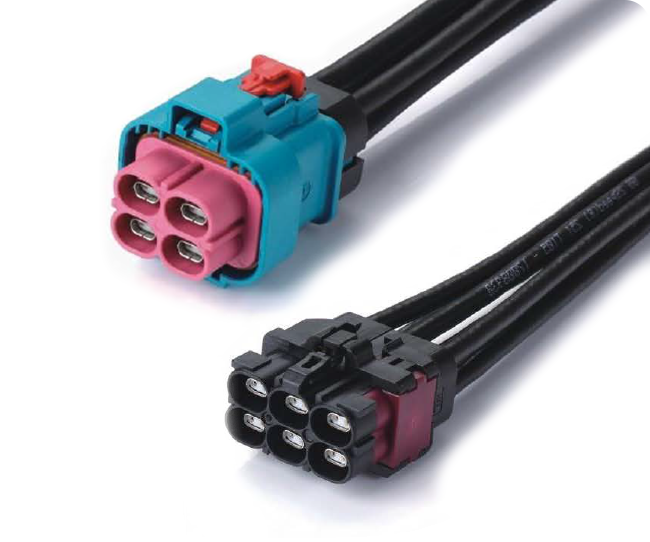
Maximizing Data Transfer and Connectivity with HMTD Connectors in Manufacturing Applications
Connectors are essential components in the manufacturing industry, and HMTD connectors are no exception. They are responsible for connecting wires and cables, enabling the transfer of electrical signals from one device to another. HMTD connectors have gained popularity in recent times due to their unique properties and functionality. In this article, we will discuss the role of HMTD connectors in the manufacturing industry and their specific applications.
What are HMTD connectors?
HMTD connectors are devices designed to connect wires and cables in various manufacturing applications. The acronym HMTD stands for High-Speed Modular Twisted-Pair Data, which reflects the primary function of these connectors – high-speed data transfer. HMTD connectors are often used in the automotive, industrial, and aerospace industries, where reliable connectivity and data transfer speeds are critical.
How do HMTD connectors work?
HMTD connectors use a modular design that consists of multiple small components that snap together to form a complete connector. The design is flexible, allowing manufacturers to customize the connector to suit their specific needs. HMTD connectors use twisted-pair cables that help to reduce interference and signal loss during data transfer, resulting in improved data transfer speeds.
Applications of HMTD connectors
HMTD connectors are used in a wide range of applications, including:
Automotive industry
HMTD connectors are often used in the automotive industry to connect various components, such as sensors, motors, and lights. They are particularly useful in electric vehicles, where reliable connectivity is essential for the vehicle’s proper functioning.
Industrial applications
HMTD connectors are also used in industrial applications, such as factory automation and process control. They are used to connect sensors, actuators, and other components, enabling real-time data transfer and control.
Aerospace industry
The aerospace industry requires reliable and robust connectors that can withstand harsh environments and extreme temperatures. HMTD connectors are an excellent choice for this industry, as they are designed to withstand high temperatures and vibration.
Advantages of HMTD connectors
HMTD connectors offer several advantages over traditional connectors, including:
Improved data transfer speeds
The twisted-pair cables used in HMTD connectors reduce signal loss and interference, resulting in faster data transfer speeds.
Customizability
The modular design of HMTD connectors allows manufacturers to customize the connector to suit their specific needs, resulting in more efficient and cost-effective manufacturing processes.
High reliability
HMTD connectors are designed to be robust and reliable, making them suitable for use in harsh environments.
Conclusion
HMTD connectors are essential components in the manufacturing industry, enabling reliable data transfer and connectivity between various components. Their modular design, customizability, and high reliability make them a popular choice in the automotive, industrial, and aerospace industries. HMTD connectors offer improved data transfer speeds, making them ideal for applications that require real-time data transfer and control.
FAQs
- What does HMTD stand for? HMTD stands for High-Speed Modular Twisted-Pair Data.
- What industries use HMTD connectors? HMTD connectors are used in the automotive, industrial, and aerospace industries.
- What are the advantages of HMTD connectors? HMTD connectors offer improved data transfer speeds, customizability, and high reliability.
- Can HMTD connectors withstand harsh environments? Yes, HMTD connectors are designed to be robust and reliable, making them suitable for use in harsh environments.
- How do HMTD connectors work? HMTD connectors use a modular design that consists of multiple small components that snap together to form a complete connector. They use twisted-pair cables that help to reduce interference and signal loss during


Leave a Reply
Want to join the discussion?Feel free to contribute!